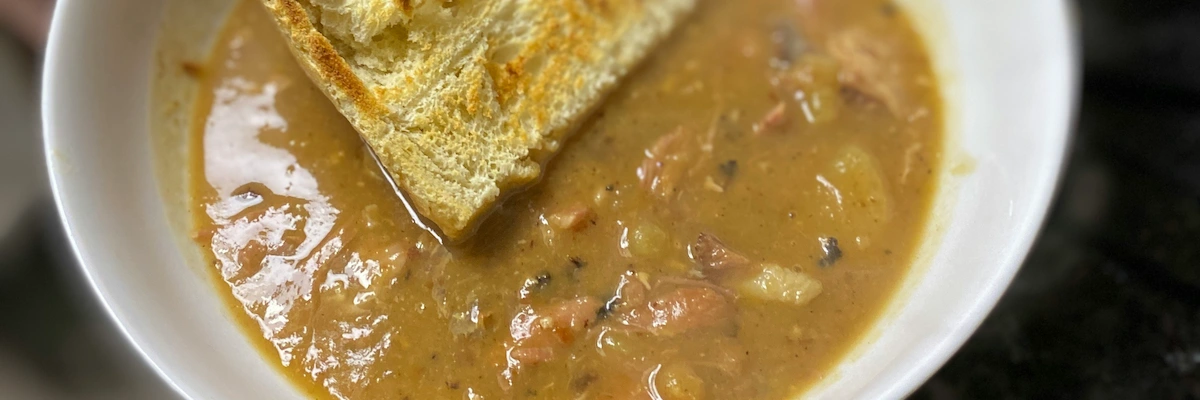


A bowl of hock soup pea soup with toasted bread on top

Canadian Split Pea Soup Recipe!

French-Canadian Culture In A Bowl

Make Canadian Split Pea Soup At Home!

What Makes This Recipe So Good?

Our French-Canadian Split Pea Soup is hearty, savoury, and most importantly, comforting. Each bowl delivers a perfect blend of earthy peas, rich ham, and refreshing herbs. Best of all, our recipe is simple: no fancy ingredients, no complicated steps, just good old-fashioned pea soup made simple. French-Canadian split pea soup can be made in large quantities at a low cost, all with ingredients available at your local grocery stores. Try our version today and discover why simple truly is the most delicious.

Ingredients

  • 2 cups dried yellow peas
  • 1 ham hock
  • 1 medium onion chopped
  • 2 tablespoons kosher salt
  • 1 bay leaf
  • 2 teaspoons black pepper
  • 8 cups water
  • 2 teaspoons dried parsley
  • 1 tablespoon butter

Steps

  1. Prepare the ingredients.
  2. Add the butter and chopped onion in a large pot at medium-high heat. Once the onions turn golden, add water, yellow split peas, and ham hock. Add parsley, bay leaf, salt, and pepper.
  3. Once the mixture begins to boil, reduce the heat to low and cover the pot with a lid. Allow the soup to simmer for about 3 hours, stirring occasionally and skimming off foam with a spoon.
  4. Once the peas have fully softened, turn of the heat and remove the ham hock from the pot. Shred the meat from the bone and return the ham to the pot.
  5. Finish with pepper and salt to taste.

What's New and Exciting!

View of trees and sun rise in Mill Creek Ravine

Picnic with Pea Soup

French-Canadian split pea soup is perfect for fall and winter hikes. Nothing beats a steaming bowl of soup while taking in the beautiful landscapes of Edmonton. The scenery is especially lovely in the morning and evening. I recommend going during the winter since you will not have to wake up early or stay up late to see the sun shine low on the horizon!

My favourite spot...

Flavour Network and the History of Canadian Pea Soup

Photo of an 18th century boat

During one of my usual internet surfing sessions, I stumbled upon a website that shares the history of pea soup in Canada. The article began by going way back to the earliest settlers in Quebec. It discusses how the settlers had to make the most of what they could store through long winters. With dried yellow peas, salted or smoked pork, a few root vegetables, and whatever herbs they had on hand, they managed to put together a soup that was not only filling but also warm and soothing.

In the article, chef and food historian Marc Miron explains that the dish likely started from meals served on the ships that crossed the Atlantic. Long trips had sailors sustain themselves on dried peas and salted meat for months at a time. When those settlers arrived in Canada, they would go on to adapt those ingredients to the new land around them. Over many generations, what was originally a simple shipboard meal eventually transformed into the French-Canadian pea soup we know today.

Old barn in country-side Quebec

The article also touches on how the recipe naturally evolved as it moved from family to family. Some cooks let it simmer until it was thick and hearty, similar to a stew. Others preferred a lighter, smoother broth. Carrots, celery, bay leaves, thyme, and a tasty piece of ham often made their way into the pot. Every version had its own charm, but all of them were made to bring warmth and comfort during the cold months.

What I loved most about the post was how it touched on the sense of connection behind the soup. More than just soup, it is a link to the people who built their lives here in Canada. The article shows how a humble pot of pea soup can hold memories, emotions, and the feeling of home.

Read the article...

Cookie Notice: We use cookies to offer you a better browsing experience, analyze site traffic, personalize content, and gather information to improve your experience. Read about how we use cookies and how you can control them by clicking here.